Work / This Crown
This Crown
Who does your hair?
Photography, audio, and video · Minnesota, and wherever the project travels · Ongoing, chapter one
Work / This Crown
Who does your hair?
Photography, audio, and video · Minnesota, and wherever the project travels · Ongoing, chapter one
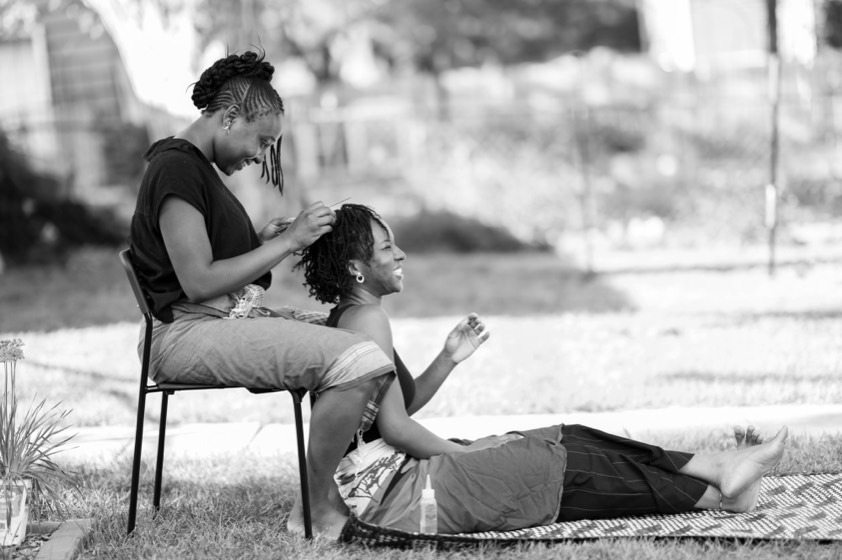
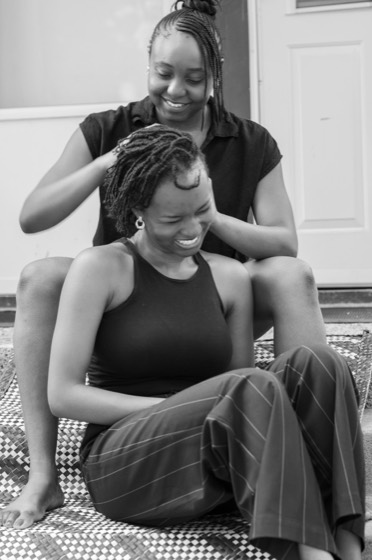
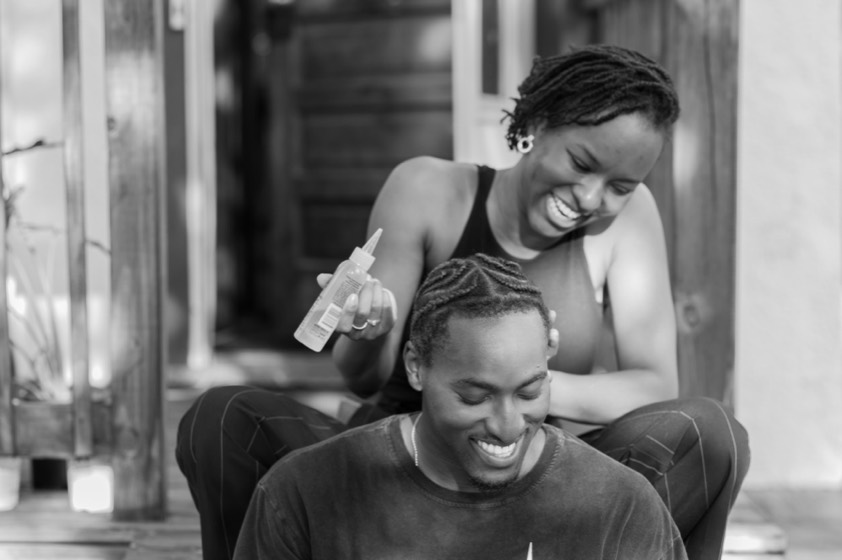
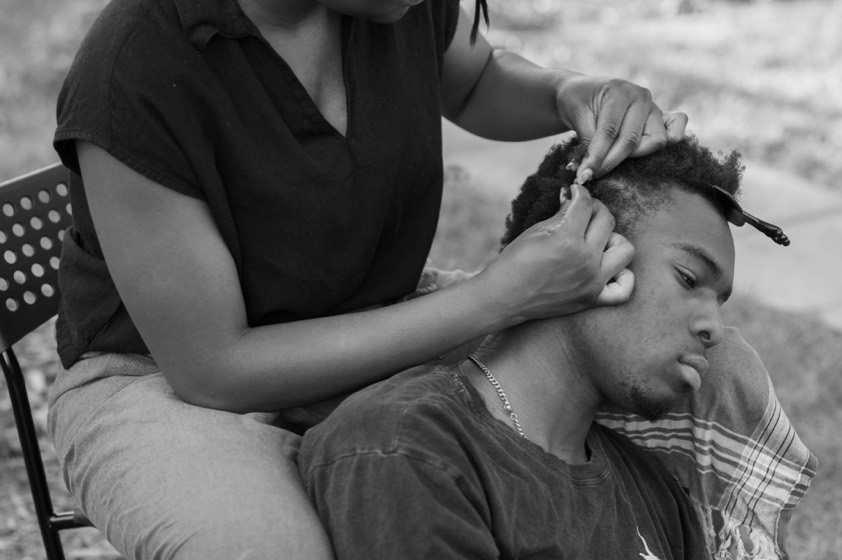
Getting your hair done can take hours. You sit, someone works behind you, and you talk while you wait. Sometimes it's a stylist. Sometimes it's your mother or your partner.
This Crown is an archive of Black hair and the people who care for it. I photograph stylists at work in their salons and people doing each other's hair at home.
Each person talks about who does their hair and what it means to them. Every stylist is named next to the style they made.
These are studies from a 2026 test session, made to work out the approach before chapter one began.
Hairstyles have long carried meaning. In parts of West Africa, a style could show a person's age or whether they were married. In Yoruba belief, the head, or ori, holds a person's destiny. Maasai warriors in Kenya wear ochre-dyed braids until they become elders.
Hair has also been policed. Heads were often shaved during the slave trade. In 1786, Louisiana's tignon laws required free women of color to cover their hair. Schools in Uganda and Kenya have long required girls to keep their hair short. In the United States, people have lost jobs over braids and locs.
In the early 1900s, Madam C.J. Walker and Annie Malone built businesses around Black hair care. In the 1950s, Mau Mau fighters in Kenya wore locks. In the 1960s, the Afro became a political statement. In 2023, Minnesota passed its own CROWN Act, which bans discrimination based on natural hair texture and styles like braids, locs, and twists.
This Crown asks who gets to decide what hair is acceptable.
Each sitting is photographed the same way. The photos follow the work from start to finish, and the finished style is shot from the back, then in profile, then from the front. I record each session, and the talk in the room becomes the note beside the images. I also record the tools and products each person uses.
I am an architect, so I draw a floor plan of each salon. That way the spaces can be compared.
Because the method stays the same, photos from different places can sit together as one archive.
The approach is inspired by J.D. 'Okhai Ojeikere, who photographed Nigerian hairstyles from behind for decades in his series Hairstyles. This Crown follows his lead and adds the people. Everyone is named, and each one is recorded talking about their hair.
Each place is a chapter. Chapter one is in Minnesota, in salons across the Twin Cities and greater Minnesota and in people's homes. Later chapters are planned in Kampala, Nairobi, and Lagos.
The project starts with my own hair, which has moved with me from Uganda to Nairobi to Minnesota.
This Crown is ongoing. If you're a stylist, or someone in your life does your hair, and you'd like to take part, get in touch.